FREE shipping on US orders over $45!
Your cart is empty!
FREE 1-year warranty on all blenders and juicers
More to Consider


Taxes and discounts calculated at checkout.


FREE shipping on US orders over $45!
FREE 1-year warranty on all blenders and juicers
More to Consider
Taxes and discounts calculated at checkout.
Lauren Salter
June 30, 2026

Lauren Salter
As Senior Director of Global Product Development, Lauren plays a major role in guiding research, development, manufacturing, and release for every nutribullet® product. She knows every nutribullet® appliance from the inside out and shares this knowledge as a blog contributor, providing expert insights on what our products do, how they work, and how to use them for maximum benefit in your own kitchen.
If you’re shopping for a juicer, you’ll quickly notice that most models fall into two categories: masticating juicers and centrifugal juicers. Both are designed to extract juice from fruits and vegetables, but they use different methods and offer different advantages.
A masticating juicer slowly crushes and presses produce to extract juice, while a centrifugal juicer relies on a fast-spinning blade and mesh filter to separate juice from pulp. Despite these differences, both can be effective tools for making fresh juice at home and increasing your intake of fruits and veggies.
The best choice depends on your priorities. Some people want a machine that produces juice as quickly as possible, while others are more concerned with juice quality and yield, leafy green performance, noise level, or cleanup. If you’ve ever wondered if a juicer is worth it, the answer largely comes down to how well the machine fits your routine.
In this guide, we’ll compare masticating and centrifugal juicers side by side so you can determine which type best fits your budget, habits, and juicing goals.
The biggest difference comes down to speed and juicing method.
Masticating juicers, also known as slow juicers or cold press juicers, uses an auger to slowly crush and press fruits and vegetables. The grinding and pressing process operates at a low speed, typically between 40 and 120 rotations per minute (RPM), which limits heat and oxidation that can degrade nutrients and protects the juice produced.
Because the process is slower and more deliberate, masticating juicers are often favored for:
Many people who juice regularly appreciate the ability to extract more juice from certain ingredients, especially leafy greens. A commercial cold press juicer may be worth exploring if you’re juicing in high volumes for a small business.
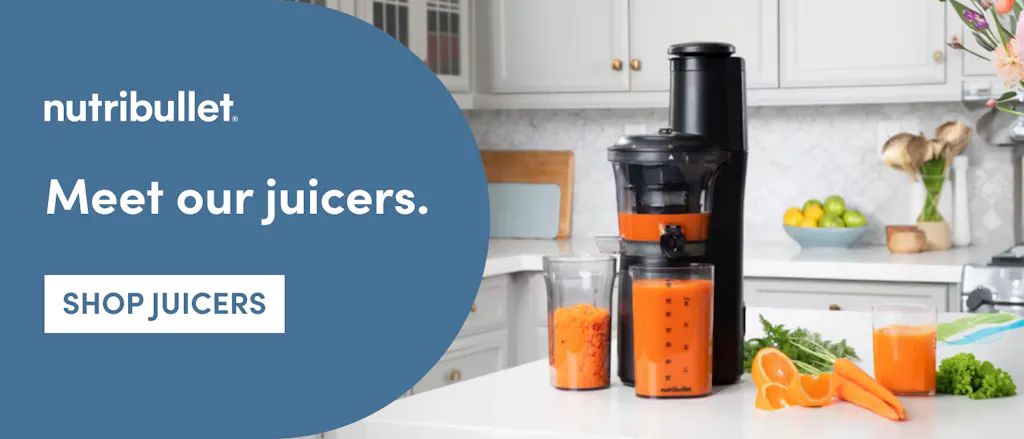
A centrifugal juicer uses a fast-spinning blade and stainless steel sieve to shred produce and separate the juice from the pulp. The spinning motion generates centrifugal force that pushes juice through the mesh filter. Most centrifugal models run at a high RPM, often between 3,000 and 16,000.
Because it works quickly, a centrifugal juicer is often a practical choice for people who want fresh juice without spending a lot of time prepping ingredients or waiting for the juicing process to finish. Unlike blenders, which blend the entire ingredient including pulp, centrifugal juicers separate the fiber from the liquid entirely.
They’re especially popular among beginners and anyone looking for a simple, everyday juicing routine.
| Comparison Factor | Masticating Juicer | Centrifugal Juicer |
| Also Called | Slow juicer, cold press juicer | Fast juicer |
| Juicing Method | Crushes and presses produce with an auger | Uses a spinning blade and mesh filter |
| Juicing Speed | Slower | Faster |
| Prep Required | Often requires more chopping | Often accepts larger pieces |
| Juice Yield | Typically higher | Typically lower |
| Juice Texture | Often thicker | Often lighter |
| Leafy Green Performance | Usually excels with greens and herbs | Can process greens but often less efficiently |
| Hard Produce Performance | Excellent | Excellent |
| Noise Level | Usually quieter | Usually louder |
| Cleanup Effort | Often more parts and longer cleaning time | Often quicker and simpler to clean |
| Typical Cost
Best For |
Typically higher
Maximizing yield, leafy greens, frequent juicing |
Often more affordable
Speed, convenience, and quick daily use |
For some people, the slower process is worth it.
If your favorite juices include kale, spinach, wheatgrass, parsley, mint, or other leafy ingredients, a masticating juicer may be worth considering.
The slow pressing process can help extract juice from delicate greens more effectively, making it a popular choice among dedicated green juice drinkers.
Many masticating juicers can extract more juice from the same amount of produce.
If you juice frequently or regularly purchase large amounts of fresh produce, getting a higher yield may help you get more out of your ingredients over time.
Many masticating juicers have smaller feed chutes, which often means cutting fruits and vegetables into smaller pieces before juicing.
For some people, that’s a worthwhile tradeoff. For others, the extra prep can become a barrier to using the appliance regularly.

For many households, convenience is the deciding factor.
One of the biggest advantages of a centrifugal juicer is speed.
These machines are designed to process fruits and vegetables quickly, making them a great fit for busy mornings or anyone who wants fresh juice without a lengthy routine.
Many centrifugal juicers feature wider feed chutes that allow larger pieces of produce to fit inside.
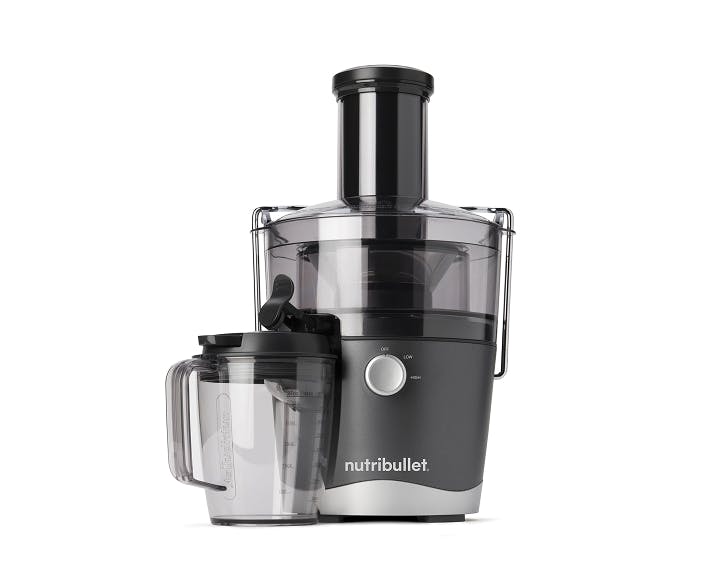
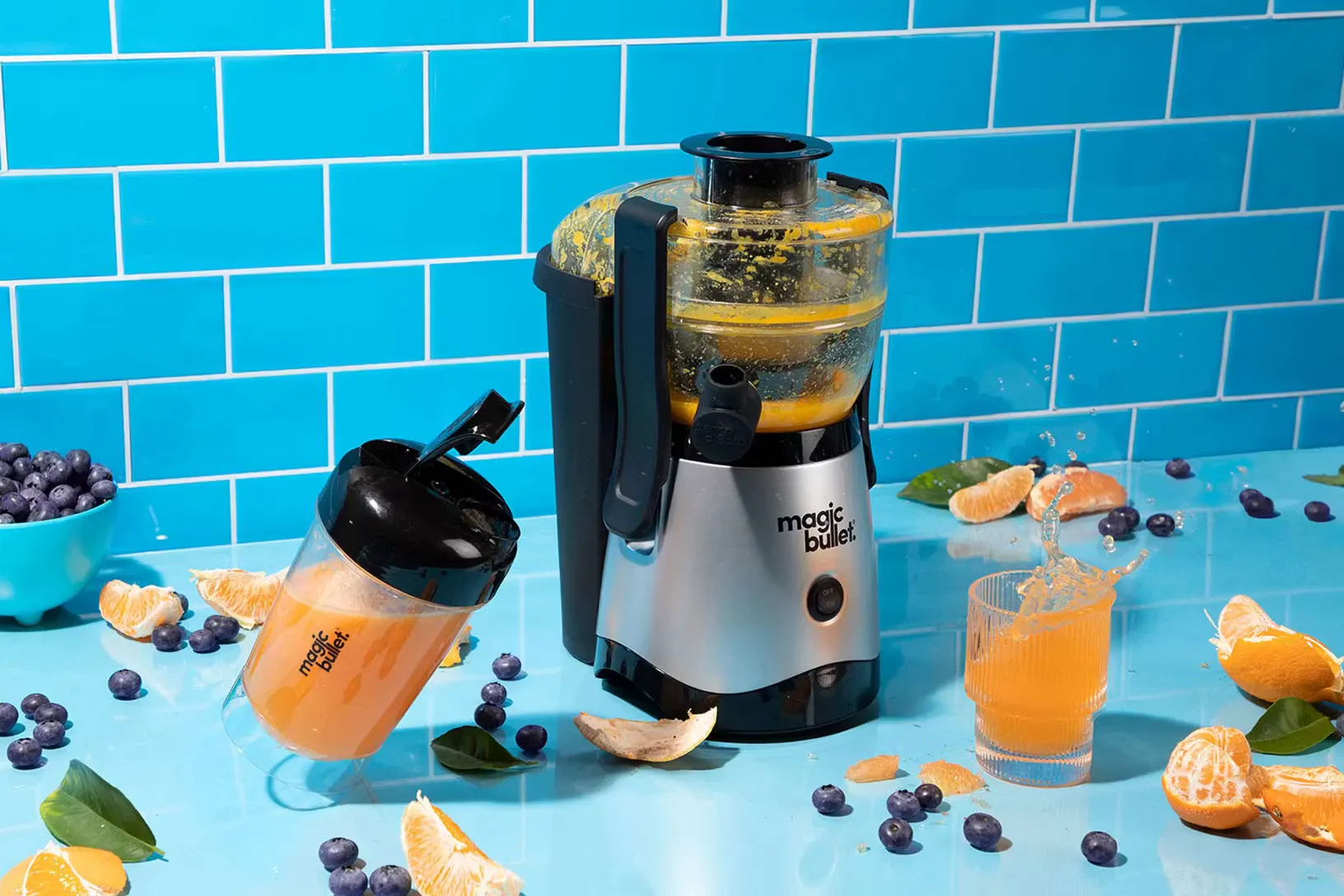
For example, the nutribullet Juicer features a 3-inch feed chute that can accommodate certain whole fruits and vegetables, helping reduce prep time before juicing.
If you’re just getting started, a centrifugal juicer can be an approachable introduction to juicing.
The process is typically straightforward, fast, and easy to work into a daily routine, making it a practical choice for beginners. Plus, there are also compact options like mini juicers if you have limited counter space or are juicing for one.
Centrifugal juicers are particularly well suited for hard produce such as:
Because they are built for speed and efficiency, they can quickly process tougher fruits and vegetables with minimal effort.
Rather than asking which juicer is best, it can be more helpful to ask which juicer best matches the way you actually plan to use it.
The best juicer isn’t necessarily the one with the longest feature list—it’s the one you’ll actually use.
Knowing how to clean a juicer before you buy can also factor into your decision. Some models have more removable parts than others, which directly affects how easy it will be to maintain a regular juicing routine. A high-end slow juicer may sound appealing, but if the extra prep and cleanup make it feel like a chore, it may end up sitting on the counter unused. On the other hand, a centrifugal juicer’s speed and convenience may make it easier to build a consistent juicing habit.
Think about your daily routine, your available time, and the types of produce you juice most often before making a decision.
If convenience is a priority, the nutribullet Juicer is designed to help make fresh juice part of your everyday routine.
As a centrifugal juicer, it emphasizes speed and simplicity without requiring a complicated process. Features include:
For people who want fresh juice without adding extra complexity to their day, a centrifugal juicer can be a practical and approachable choice.
But at the end of the day, there’s no one-size-fits-all answer. The right juicer is the one that supports your lifestyle and makes it easier to enjoy fresh juice at home. Whether that means the slower, deliberate approach of a masticating juicer or the quick convenience of a centrifugal juicer, both can be valuable tools for helping you enjoy more fruits and vegetables every day.
Not always.
A masticating juicer may be the better choice for leafy greens, maximizing juice yield, and slower extraction. A centrifugal juicer is typically better for speed, convenience, and easy everyday juicing.
Yes.
A centrifugal juicer can be a great option for beginners because it’s fast, straightforward to use, and often requires less prep work than a slow juicer.
A masticating juicer is often the preferred choice for leafy greens because the slower pressing process can help extract juice from delicate ingredients more effectively.
A centrifugal juicer is faster.
It uses a high-speed spinning blade and sieve to quickly process fruits and vegetables, making it a popular option for people who prioritize convenience.
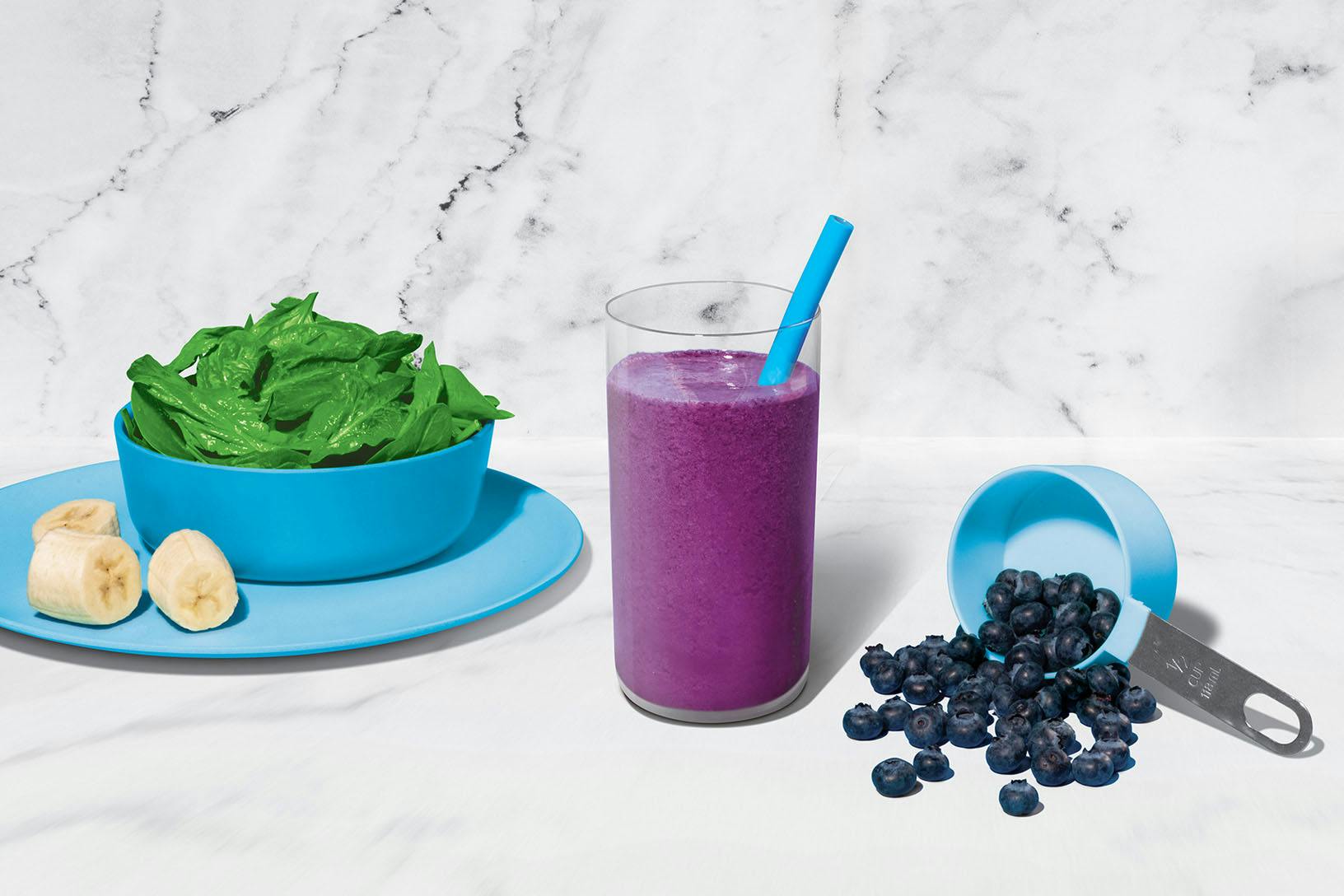
Is there such a thing as a perfect smoothie? This sweet medley certainly makes a strong case. With a classic combination of blueberries, banana, and spinach, this superstar smoothie provides a powerful nutrient boost!
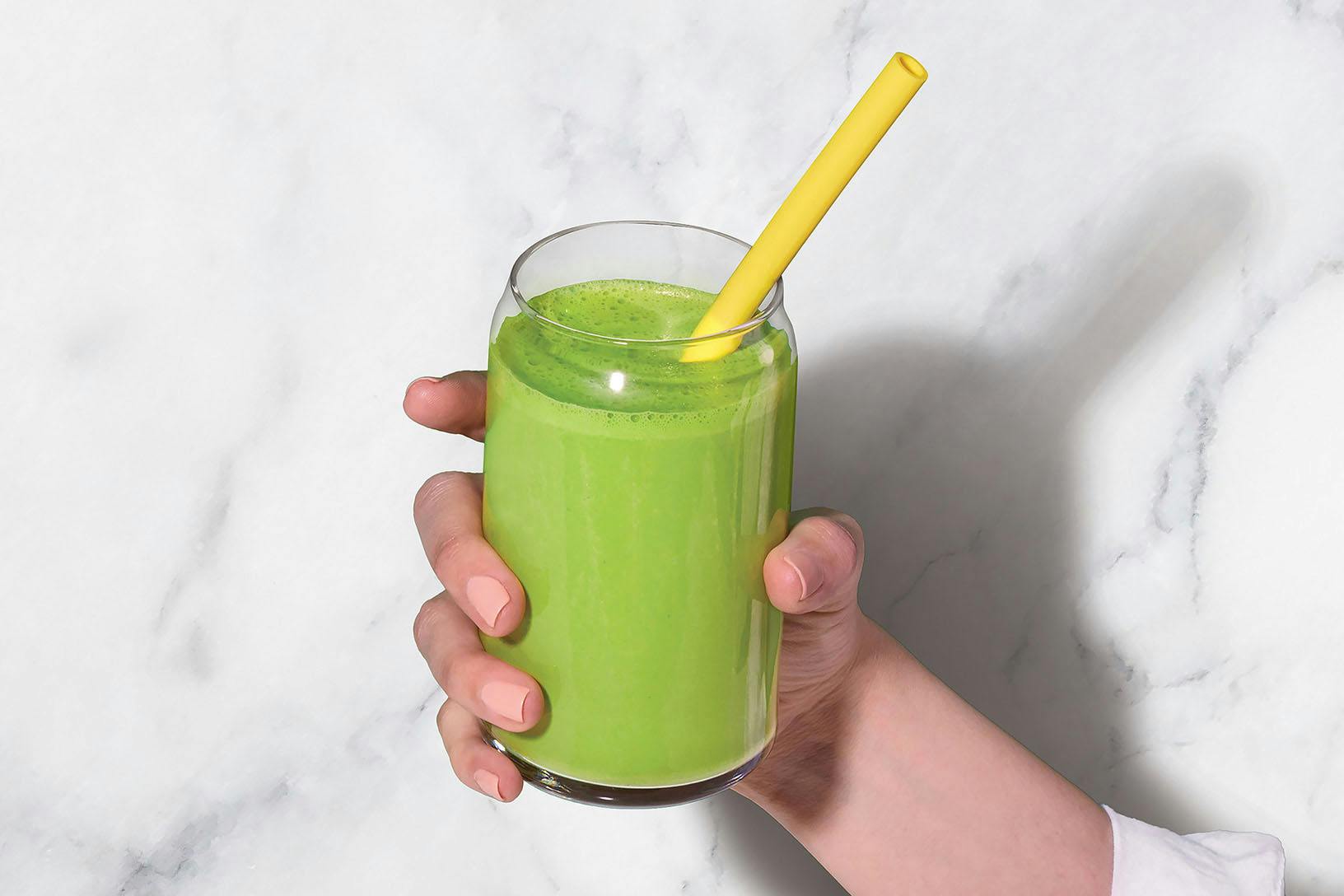
Consider this blend the little black dress of nutribullet smoothies: it never goes out of style. To help keep your energy stable throughout the day, aim to balance your meals and snacks with high-quality protein, healthy fats, and fiber-filled carbs – like this combo of Greek yogurt, peanut butter, fruit, and veggies. There’s a reason this one is always on-trend.
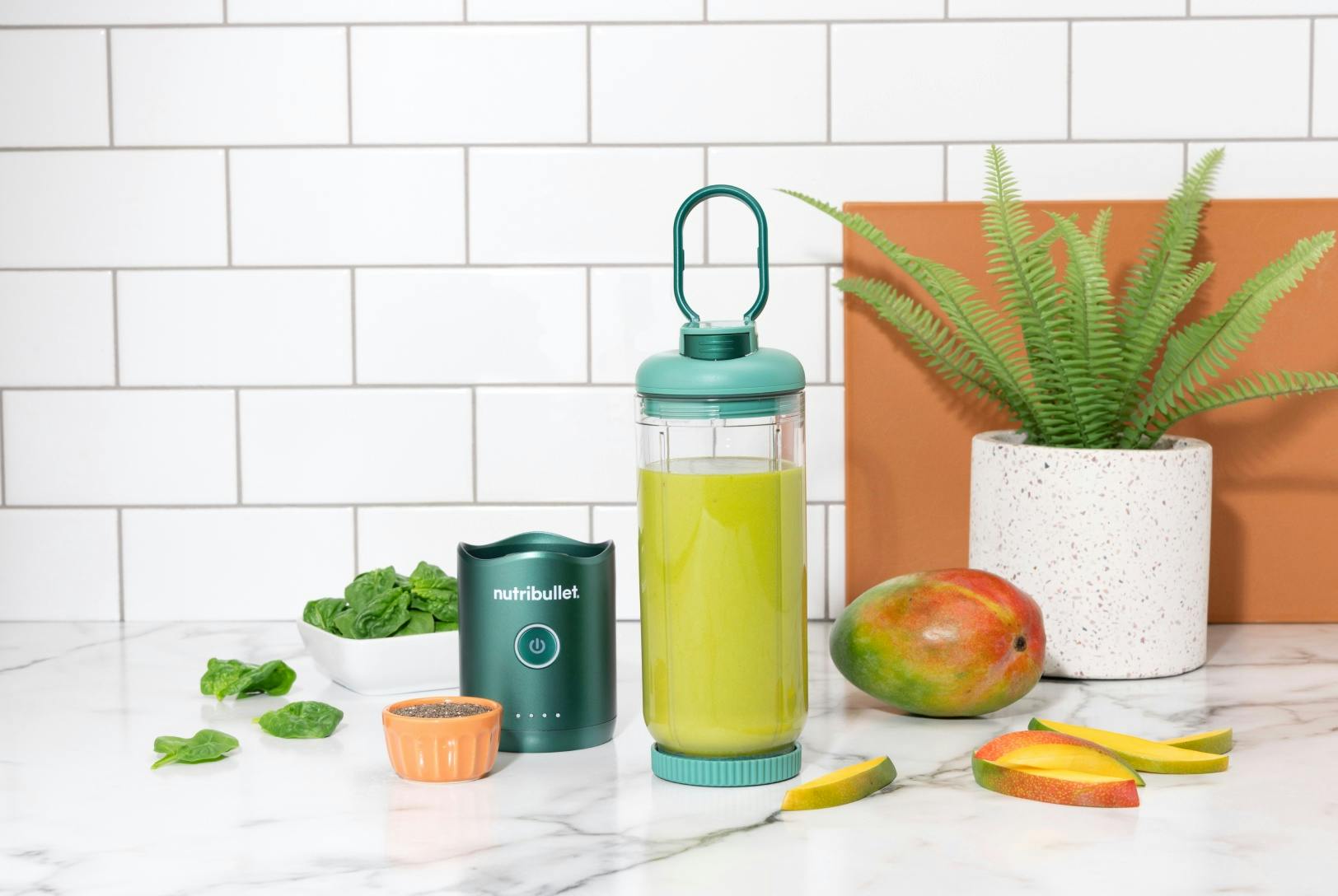
Start your day on a high note with this nutritiously cheerful blend of greens, mango, banana, and chia seeds.