FREE shipping on US orders over $45!
Your cart is empty!
FREE 1-year warranty on all blenders and juicers
More to Consider


Taxes and discounts calculated at checkout.


FREE shipping on US orders over $45!
FREE 1-year warranty on all blenders and juicers
More to Consider
Taxes and discounts calculated at checkout.

nutribullet
November 18, 2026

nutribullet
Nutrition made easy. At nutribullet, we believe that good nutrition has the power to transform lives. Our products, from our blenders to our blends, make nutrition fun and hassle-free for any lifestyle. So, if you're looking for a simple way to be healthy, we've got you covered.
There’s nothing quite like a perfectly blended smoothie. Maybe you love yours thick and creamy, almost like a milkshake, or perhaps you’d rather have a lighter, more refreshing drink that’s easy to sip on the go. Either way, getting the consistency just right can make all the difference.
But what happens when your smoothie turns out too watery? Or so thick that your blender struggles to get everything moving?
The good news is that you usually don’t need to start over. A few simple ingredient swaps and blending adjustments can help you get your smoothie back on track.
The secret is finding the right balance of frozen ingredients, creamy additions, and liquid. In this guide, we’ll cover how to make a smoothie thicker, how to make a smoothie thinner, and how to troubleshoot common texture problems so you can enjoy a delicious, consistent blend every time.
If your smoothie is looking a little too thin, don’t worry! There are plenty of easy ways to add body without sacrificing flavor.
The simplest approach is to add ingredients that naturally thicken your smoothie, such as frozen fruit, banana, yogurt, avocado, nut butter, oats, or chia seeds. You can also start with less liquid next time, provided you follow your blender’s minimum liquid requirements.
One important tip: If you’re not sure where to start, use frozen fruit. It thickens and chills your smoothie without diluting the flavor as melting ice can.
Here are four easy ways to achieve a thicker consistency.
Want a thicker, colder smoothie? Try swapping fresh fruit for frozen fruit.
Frozen bananas, mango, berries, and pineapple are all excellent choices. They add body and a frosty texture while keeping your smoothie full of fruity flavor.
Frozen banana is especially useful if you love a creamy, milkshake-like consistency. Mango adds a naturally smooth texture, while berries and pineapple bring a refreshing fruity flavor.
Try this: If your usual strawberry smoothie turns out too thin, add a few frozen strawberries or half a frozen banana and blend again.
You can also freeze ripe fruit before it spoils, making it easy to keep smoothie ingredients ready whenever you need them.

Sometimes, the best way to thicken a smoothie is to make it creamier.
Ingredients such as Greek yogurt, avocado, or nut butter can add body and create a smoother mouthfeel.
The ingredient you choose depends on the flavor you’re going for:
Banana is another excellent option, especially if you enjoy sweeter smoothies. Keep in mind that adding banana will may notably influence the flavor, while avocado tends to have a milder taste.
Culinary Tip: Start with a small amount of your chosen ingredient, blend, and check the consistency before adding more. It’s much easier to thicken a smoothie gradually than to correct one that’s become too heavy.
Oats and chia seeds are handy ingredients when you want to thicken up your smoothie and give it a little more staying power and a thicker texture.
Oats help create a fuller, more substantial consistency, while chia seeds absorb liquid and form a gel-like texture as they hydrate.
Both can be useful additions to breakfast smoothies, particularly when you’re looking for something more substantial than a light fruit blend.
Try this: Add a small spoonful of oats or chia seeds to your smoothie, blend, and let it sit briefly. Check the consistency before adding more.
There’s one thing to keep in mind: These ingredients can continue absorbing liquid after blending. A smoothie that looks just right immediately after blending may become noticeably thicker a few minutes later.
Start small to avoid ending up with a smoothie that’s too dense.
This might sound obvious, but one of the easiest ways to make a thicker smoothie is to use less liquid in the first place.
Milk, water, coconut water, and other smoothie bases help ingredients circulate through the blender. However, too much liquid can leave you with a thinner result than you intended.
Instead of pouring in all your liquid at once, start with an amount appropriate for your recipe and blender. Blend, check the consistency, and add more liquid only as needed.
Important: Don’t reduce the liquid below the minimum required for your specific blender. Too little liquid can prevent ingredients from circulating properly, strain the motor, and potentially cause overheating. Always follow the manufacturer’s instructions for liquid quantities, fill levels, and blending times.
Once you find a liquid-to-fruit ratio that works for your favorite recipe, you’ll have a useful starting point for future smoothies.

Adding ice is a simple way to thicken a smoothie while giving it a colder, frostier consistency.
As ice blends, it breaks down into tiny particles that add volume and body to your smoothie without introducing additional liquid. It’s especially useful when working with fresh fruit or ingredients that have a higher water content.
Start with a small handful of ice cubes, then blend and check the consistency. Add more as needed until you reach your desired thickness.
Important: Add ice gradually to avoid overloading your blender or ending up with a smoothie that’s too icy or watered down as the ice melts. Make sure your blender is designed to crush ice, since some brands list it among what not to put in a blender, and follow the manufacturer’s instructions for ice quantities and blending.
For an even thicker, creamier result, try combining ice with frozen fruit. You’ll get a frosty texture with more natural sweetness and flavor.
Sometimes, the problem goes in the opposite direction. You’ve added frozen fruit, yogurt, oats, or protein powder, and suddenly your smoothie is much thicker than expected.
Fortunately, thinning a smoothie is usually straightforward.
The easiest solution is to add a little more liquid, blend briefly, and reassess. The trick is to add it gradually rather than pouring in a large amount all at once.
Whenever possible, use the same liquid already in your recipe. This helps preserve the flavor you originally intended.
If your smoothie is too thick but already tastes just right, water is often the simplest fix.
It loosens the consistency without adding sweetness or significantly changing the flavor.
This works particularly well for fruit smoothies that are already sweet enough, or for green smoothies made with spinach or kale where you want the ingredients to remain the star of the show.
Try this: Add 1–2 tablespoons of water, blend briefly, and check the texture. Repeat if necessary until your smoothie reaches your preferred consistency.
If you’re making a particularly thick blend, you may need more, but adding it gradually gives you much better control.
If you’d like to thin your smoothie while keeping it creamy, try adding milk.
Dairy milk, oat milk, soy milk, almond milk, and other preferred milk alternatives can help loosen a thick smoothie without making it feel watery.
For example, if your banana-peanut butter smoothie is too thick to drink comfortably, a small splash of milk can help create a smoother, more pourable consistency.
Culinary Tip: Use the same milk you started with whenever possible. If your recipe uses oat milk, adding more oat milk will generally preserve the flavor and creaminess better than switching to water.

Juice can help thin a smoothie while adding a little extra flavor and sweetness.
Orange juice pairs well with mango, pineapple, berries, and banana, while apple juice can complement a variety of fruit combinations.
However, it’s good to remember that juice does contain a lot of sugar, so if you’re watching added sugars or if your smoothie is already very sweet, adding more juice may make it less balanced.
Instead, consider water, coconut water, or unsweetened milk when you simply want to loosen the consistency without increasing the sweetness.
Try this: Add a small splash of juice to a tropical smoothie made with mango and pineapple, blend briefly, and taste before adding more.
The goal is to improve the texture while keeping the flavors balanced.
There’s no single liquid-to-fruit ratio that works for every smoothie. The right amount depends on the fruit you’re using, how much frozen produce you’ve added, whether you’re including thickening ingredients or tough leafy greens, and the type of blender you own.
For example, fresh watermelon and ripe strawberries contain considerably more water than frozen banana, oats, or nut butter. A smoothie made primarily with juicy fresh fruit may need less added liquid than one packed with frozen ingredients.
Here’s a simple approach:
Making one small adjustment at a time helps you avoid overcorrecting and ending up with a smoothie that’s too thin or too thick in the opposite direction.
Smoothie bowls are a little different from traditional smoothies.
Instead of creating a drinkable consistency, the goal is a thick, spoonable blend that can hold toppings such as granola, fresh fruit, seeds, coconut flakes, and nut butter.
The secret? Use mostly frozen ingredients and keep the liquid relatively low while still following your blender’s minimum requirements. It’s also best to make smoothie bowls in high-powered, full-size blenders that include a removable lid and a tamper. This lets you move thick ingredients toward the blade during blending without having to rely on additional liquid.
Frozen bananas, mango, and berries are excellent starting points. You can also add a creamy ingredient, such as yogurt, avocado, or nut butter, to help create a rich texture.
Start with frozen fruit. Frozen banana, mango, or blends like acai are particularly useful for creating a thick, creamy base.
Add liquid gradually. Use only enough liquid to support blending, within the minimum requirements for your appliance. Too much liquid can quickly turn your smoothie bowl into a drink.
Choose the right blender. A full-sized blender with suitable controls and a container designed for thick mixtures can be a better choice for smoothie bowls than a personal blender that isn’t intended for low-liquid blends.
Use a tamper if your blender supports one. Some full-sized types of blenders include a tamper that helps move ingredients toward the blades without stopping the machine. Always use it according to the manufacturer’s instructions.
Don’t force the motor. If the mixture stops circulating, follow the manufacturer’s guidance. Stop the blender before redistributing ingredients manually, and never reach into a running blender.
A smoothie bowl should be thick enough to eat with a spoon, but it shouldn’t require your blender to struggle through the entire process.
If you’re regularly making smoothie bowls, check whether your blender is designed for thick mixtures and what minimum liquid quantities it requires.

Sometimes, you follow a recipe perfectly and still end up with a smoothie that isn’t quite right.
Maybe it’s watery, too icy, or full of little bits of protein powder. The good news is that most texture problems have a simple solution.
Here’s how to troubleshoot some of the most common smoothie mishaps.
If you’ve added too much liquid relative to the amount of fruit and other solid ingredients, the easiest solution is to add an ingredient that contributes more body.
Try one of these:
Blend briefly and check the consistency before adding more.
If you’re using chia seeds or oats, give the smoothie a little time to thicken before deciding whether it needs another addition.
For next time, consider reducing the amount of liquid slightly while staying within your blender’s minimum requirements.
A thick smoothie can be delicious, but there’s a difference between a creamy blend and one that won’t move through the blender.
If your mixture isn’t circulating properly, avoid letting the motor run against a stalled mixture.
Instead, follow these steps:
Adding 1–2 tablespoons of liquid near the blades can be a useful starting point when correcting a thick smoothie, provided your blender’s design and instructions allow it.
If you need to redistribute ingredients manually, switch off and unplug the blender first, and never reach into the blending container while the blades are moving.
For future smoothies: Try cutting large frozen fruit pieces into smaller chunks and adding liquid before the frozen ingredients, following your blender’s recommended loading order.
If your smoothie tastes watery or has a crunchy, icy texture, you may be relying too heavily on ice.
Ice can make a smoothie colder and temporarily thicker, but it eventually melts and dilutes the flavor.
The solution? Replace some of the ice with frozen fruit.
Frozen banana, mango, berries, and pineapple can help create a thicker texture while keeping the flavor concentrated.
You can also add a creamy ingredient, such as yogurt or avocado, if it works with your recipe.
For example, a strawberry smoothie made with frozen strawberries and banana will often have a creamier texture than one made with fresh strawberries and a large handful of ice.
You don’t necessarily need to eliminate ice entirely. Just use it sparingly when frozen fruit can do the job.
Nobody wants a smoothie with little clumps of protein powder or dry pockets of ingredients.
If your smoothie has a gritty or powdery texture, the ingredients may not have dispersed evenly during blending.
One helpful technique is to blend your liquid and protein powder first, then add the fruit and other thick ingredients.
This gives the powder a chance to become evenly incorporated before the mixture thickens.
A few other tips:
If your smoothie is already blended and still feels powdery, try adding a little more liquid and blending briefly, provided the mixture is circulating properly.
Keep in mind that some ingredients, including certain protein powders and seeds, naturally contribute a slightly grainy texture.
A little foam on top of a smoothie is completely normal.
Blending incorporates air into the mixture, particularly when you’re using leafy greens, protein powder, or ingredients that create a lot of surface bubbles.
If you’d prefer a smoother finish, try blending for a shorter time once the ingredients are fully combined.
You can also:
If you’re using a blender with variable speed settings, experiment with the lowest effective speed for your final blending step.
The goal is to blend until smooth without incorporating more air than necessary.
Ever made a smoothie that looks perfectly blended at first, only to find a watery layer forming after it sits for a few minutes?
This can happen when ingredients with different densities separate over time. Some smoothies naturally separate more than others, particularly those containing fresh fruit, leafy greens, or ingredients with different amounts of fiber and water.
Fortunately, the fix is simple.
Give your smoothie a quick stir or brief reblend before drinking.
If the texture needs a little help, you can add a small amount of compatible liquid or a few pieces of frozen fruit, depending on whether the mixture needs thinning or thickening.
For future blends, ingredients such as banana, yogurt, or chia seeds may help create a more uniform texture, depending on the recipe.
And remember, a little separation doesn’t necessarily mean anything is wrong with your smoothie. Some ingredient combinations simply need a quick stir before serving.

The order in which you add ingredients can make a difference in how easily your smoothie blends.
Following a consistent loading order helps ingredients move through the blending zone and can make it easier to achieve the texture you’re looking for.
For nutribullet® blending cups, the recommended ingredient order is:
Always follow the loading instructions for your specific nutribullet® model, as recommendations can vary by product.
A few important reminders:
Once you have the right ingredient proportions and loading order, it’s much easier to make consistent smoothies without constantly troubleshooting the texture.
Now that you know how individual ingredients affect texture, let’s put everything together.
Whether you love thick smoothie bowls or lighter breakfast smoothies, the following method can help you get the consistency right more consistently.
Before you start blending, think about what you want to make.
Having a clear goal makes it easier to choose your ingredients.
You don’t have to measure every ingredient perfectly, but starting with consistent proportions can help you recreate your favorite smoothies.
If you’re experimenting with a new recipe, pay attention to how much frozen fruit, liquid, and thickening ingredients you use.
Follow your blender’s minimum liquid requirements and maximum fill limits throughout the process.
Add ingredients in the recommended order, secure the lid, and blend using the appropriate setting.
If you’re using a personal blender, make sure the ingredients are suitable for that model and that the container is filled correctly.
Avoid operating the blender with insufficient liquid or continuing to run it when the mixture isn’t circulating.
Once blending is complete, take a moment to assess the result.
Is the smoothie too thick to pour? Too thin? Too icy? Or exactly what you wanted?
If you’re making a smoothie bowl, check that it’s thick enough to support your toppings without being so dense that the blender struggles.
This is the most important step.
Make one adjustment, blend, and reassess before adding anything else. This helps you avoid overcorrecting.
Once you’ve found a combination you love, save the recipe.
Make a note of the fruit, liquid, and other ingredients you used, along with any adjustments that helped you achieve your preferred consistency.
Over time, you’ll develop a better sense of which ingredients create a thicker smoothie, which liquids keep it drinkable, and how your particular blender performs.
And that’s the real secret to making great smoothies: a little experimentation, a few simple techniques, and ingredients you love.
The perfect smoothie consistency is a personal thing. Some people love a thick, creamy blend, while others prefer something light and refreshing.
Fortunately, getting the texture right doesn’t have to be complicated.
Remember the basic rule: Start with an appropriate amount of liquid, then adjust gradually.
For thicker smoothies, try frozen fruit, banana, yogurt, avocado, oats, or chia seeds. For thinner smoothies, add small amounts of water, milk, or another liquid that complements your recipe.
If your smoothie isn’t quite right, don’t be afraid to experiment. A small adjustment can make a big difference.
With the right ingredients and blending technique, it’s easier to make smoothies that suit your taste and routine.
Ready to make blending part of your everyday routine? Explore nutribullet® blenders and smoothie recipes for more inspiration, practical tips, and delicious combinations to try at home.
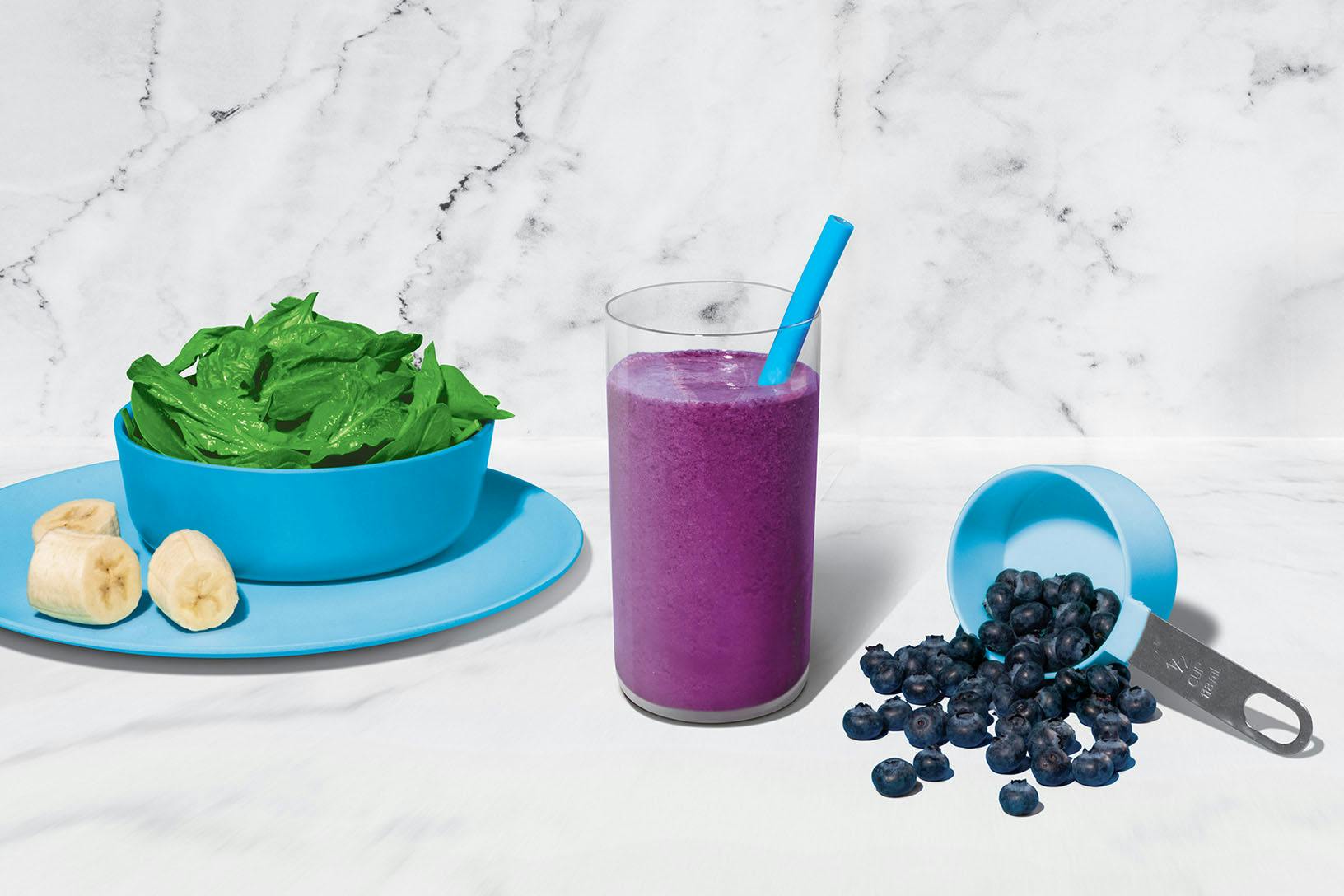
Is there such a thing as a perfect smoothie? This sweet medley certainly makes a strong case. With a classic combination of blueberries, banana, and spinach, this superstar smoothie provides a powerful nutrient boost!
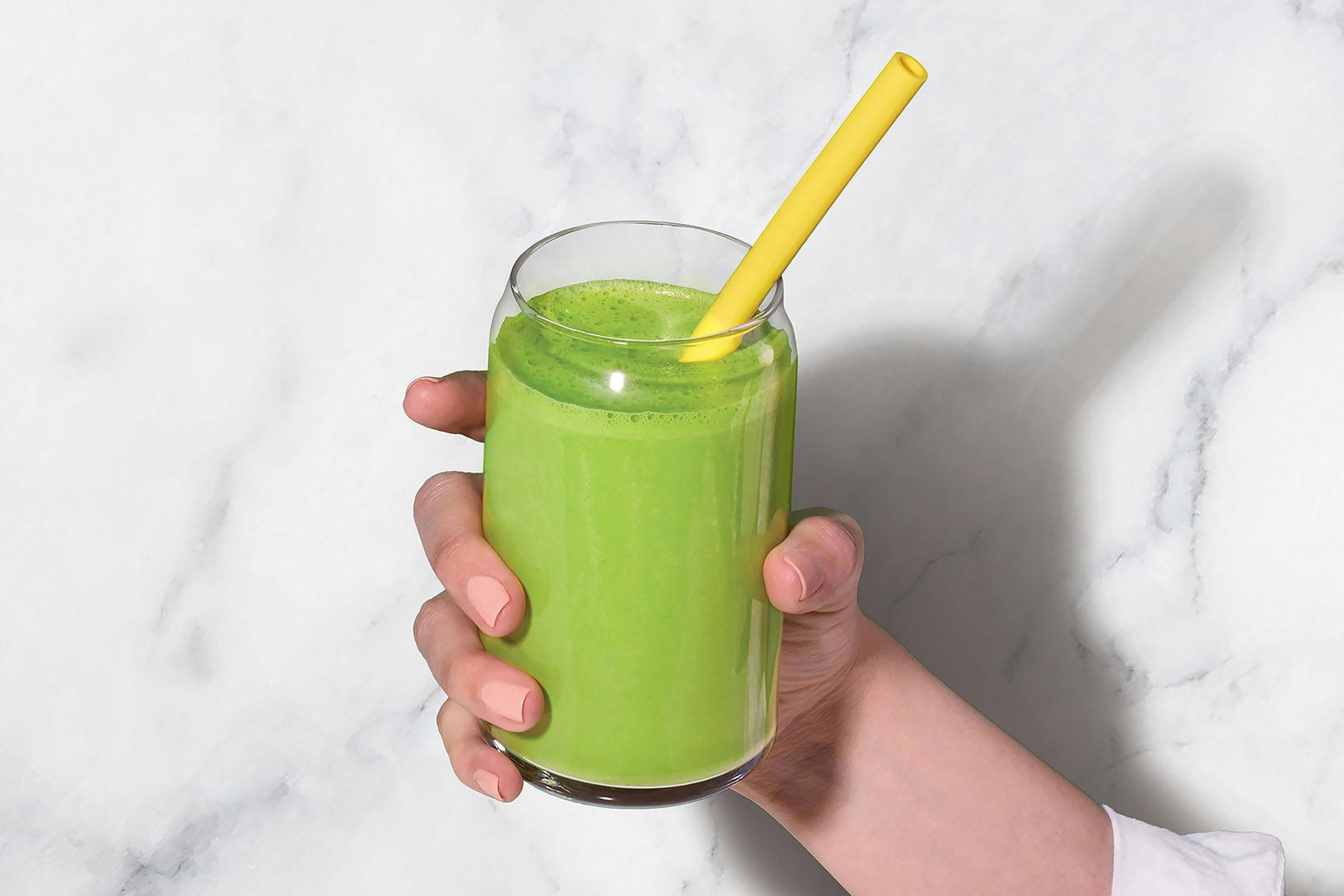
Consider this blend the little black dress of nutribullet smoothies: it never goes out of style. To help keep your energy stable throughout the day, aim to balance your meals and snacks with high-quality protein, healthy fats, and fiber-filled carbs – like this combo of Greek yogurt, peanut butter, fruit, and veggies. There’s a reason this one is always on-trend.
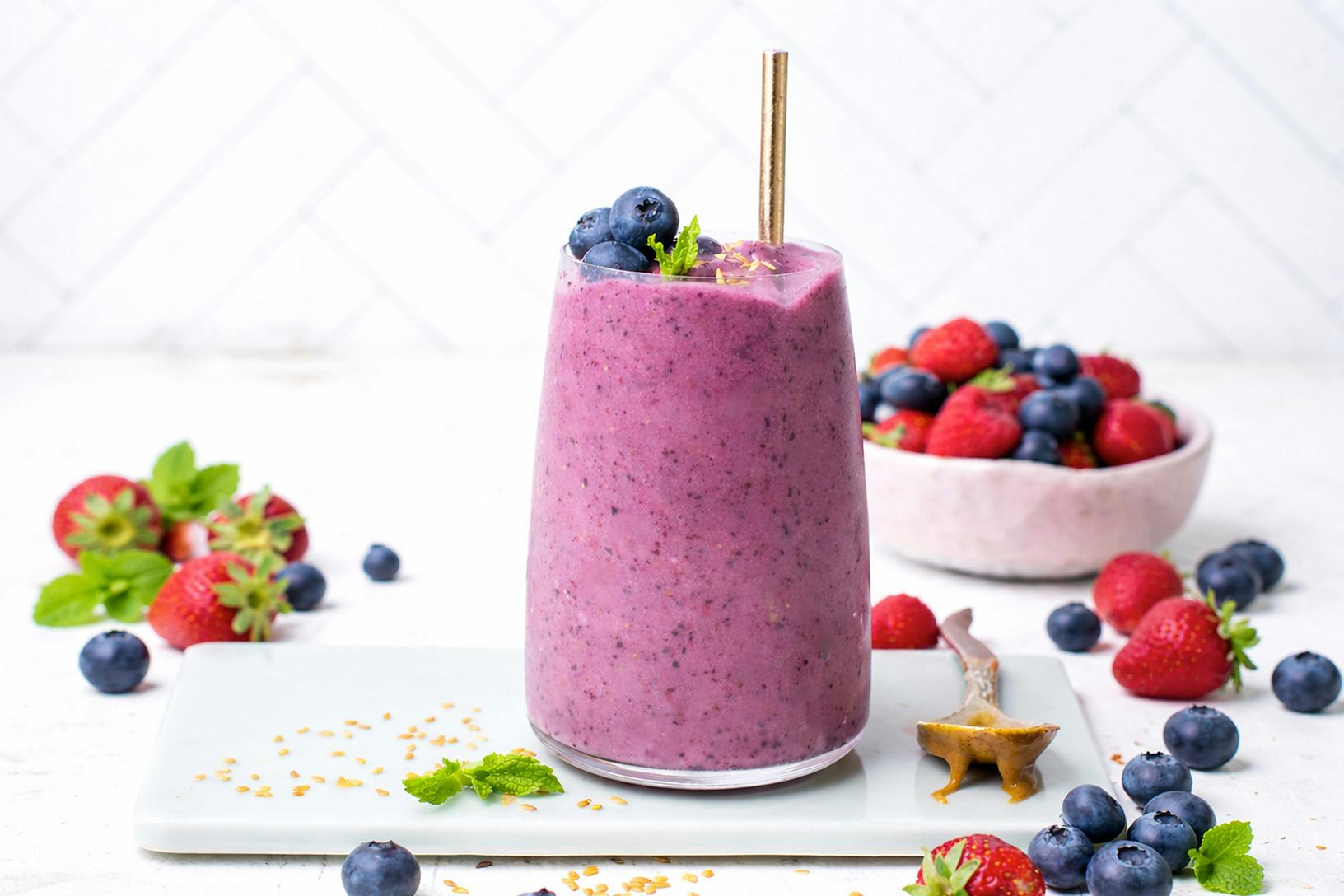
Start your day with an amazing dose of fiber and protein with this berry-liciousand super-nutritious big-batch smoothie.