FREE shipping on US orders over $45!
Your cart is empty!
FREE 1-year warranty on all blenders and juicers
More to Consider


Taxes and discounts calculated at checkout.


Free shipping on US orders over $45.
Free 1-year warranty on all blenders and juicers.

FREE shipping on US orders over $45!
FREE 1-year warranty on all blenders and juicers
More to Consider
Taxes and discounts calculated at checkout.
Lauren Salter
July 22, 2026

Lauren Salter
As Senior Director of Global Product Development, Lauren plays a major role in guiding research, development, manufacturing, and release for every nutribullet® product. She knows every nutribullet® appliance from the inside out and shares this knowledge as a blog contributor, providing expert insights on what our products do, how they work, and how to use them for maximum benefit in your own kitchen.
Blender noise is one of the most common complaints about an otherwise useful kitchen appliance. Whether you’re making a morning smoothie before the rest of the house wakes up, blending in a small apartment, or sharing a kitchen with roommates, a loud blender can feel disruptive.
The good news is that there are ways to reduce the noise.
Some fixes take only a few seconds, while others require a little maintenance or a change in blending habits. Together, they can make a noticeable difference. The key is understanding where blender noise comes from in the first place. In most cases, the sound you’re hearing is a combination of motor noise and vibration. Reduce one—or ideally both—and you’ll end up with a quieter blending experience.
This guide covers 14 practical tips on how to make a blender quiet, from quick adjustments you can make today to longer-term solutions that may be worth considering.
Before jumping into the fixes for making a blender quiet, it helps to understand what’s creating the noise.
Most blender noise comes from two primary sources:
Hard countertops, nearby walls, and cabinets can amplify sound by letting it bounce off the walls or surfaces and back into the room. Loose components may rattle. Dense or chunky ingredients, like frozen fruit or ice cream, can force the motor to work harder than necessary. Even something as simple as a poorly seated blade assembly can increase noise levels.
Most of the tips below address one or both of these root causes directly.

These simple adjustments cost little—or nothing—and can often reduce noise right away.
Sound reflects off hard surfaces.
If your blender sits directly against a wall, backsplash, or cabinet, those surfaces can bounce sound back into the room and make the blender seem noisier than it actually is.
Try moving it closer to the center of the counter during use. Even a few inches of additional space can noticeably reduce the amount of reflected sound.
For many recipes, pulse blending can accomplish the same result with less sustained noise.
Short bursts are often quieter than a long, uninterrupted blend cycle, and they give ingredients time to settle between pulses. As an added benefit, pulsing can help reduce heat buildup and pressure inside the blending jar or cup.
An overloaded blender has to work harder.
Packing too many ingredients into the pitcher or cup—or filling beyond the MAX line—creates extra resistance for the motor. More resistance typically means more noise and more heat.
Keeping ingredient levels within the recommended limits helps the blender run more efficiently and often more quietly.
A few small changes in blending technique can make a surprisingly big difference over time.
The order you add ingredients matters.
Start with greens and softer produce, followed by fruit, nuts, or seeds. Add liquid next, then place ice cubes or frozen ingredients on top.
This layering method helps ingredients circulate more easily and prevents the motor from immediately fighting through a dense mass of frozen ingredients—one of the loudest moments in any blend cycle.
If your blender offers variable speed controls, avoid starting at maximum power.
Beginning on a lower setting allows ingredients to begin moving before the motor ramps up. This reduces strain during startup and creates a smoother blending vortex, which often results in less noise overall.
Sometimes the simplest solution is the most effective.
Even a relatively quiet blender is still a blender. If you like a fruit or veggie smoothie early in the morning but share walls with neighbors or live with sleeping family members, adjusting your blending schedule or using a portable blender to blend somewhere the noise won’t bother anyone may be the easiest way to avoid disturbances.
If that’s not practical, the next section offers a few maintenance-related fixes that can help.
Sometimes increased noise is a sign that something needs attention through regular blender maintenance—not necessarily replacement.
A loose blade assembly, improperly seated cup, or unsecured lid can create rattling sounds during operation.
Before each use, take a quick moment to verify that all components are fully locked into place. Proper assembly helps reduce vibration and unnecessary noise.
Small amounts of dried food residue can interfere with how components fit together.
Regularly cleaning around the blade assembly and motor base helps ensure that everything sits properly and rotates smoothly. A quick wipe-down can eliminate minor rattles before they become recurring issues.
Most blender bases include small rubber feet designed to absorb vibration and grip the countertop.
If these feet become worn, cracked, or detached, the blender may vibrate more than normal during operation.
Fortunately, replacement feet are often inexpensive and easy to install.
The gasket is the rubber seal between the blade assembly and the blending container in many blender models.
If you’re using a blender that has a gasket and it becomes damaged, stretched, or improperly seated, it can affect blade stability and contribute to unusual vibration or rattling.
If your blender suddenly sounds different than it used to, the gasket is one of the first components worth checking.

For frequent blender users, these longer-term solutions may be worth considering.
A blender sound enclosure—sometimes called a blender box—is designed to reduce the amount of noise that escapes during blending.
These enclosures are commonly used in commercial settings but are also available for home use. When properly designed with adequate airflow, they can significantly reduce perceived noise levels.
Not every blending job requires a countertop blender.
For soups, sauces, dressings, and softer ingredients, an immersion blender is often considerably quieter and easier to clean. Having one available can reduce how often you need to use a full-size blender.
Some blenders are specifically engineered with quieter operation in mind. Noise levels vary widely from one manufacturer to the next, so quiet performance is worth weighing when you’re choosing a blender.
The nutribullet Ultra, for example, features a motor designed to produce lower-frequency sound than previous nutribullet models, making it the quietest single-serve blender in the nutribullet personal blender lineup.
If noise is a consistent frustration, upgrading to a quieter blender may ultimately provide more relief than trying to work around an appliance that simply isn’t designed for low-noise operation.
Not every popular internet tip is actually a good idea.
You may have seen recommendations to place a towel, mat, or folded cloth underneath your blender to absorb vibration.
While it sounds logical, it’s not recommended.
nutribullet blenders are designed to operate on a hard, flat, stable surface. Soft materials can affect stability and may block ventilation openings underneath the motor base. Proper airflow is important for keeping the motor cool during operation.
This approach can create even bigger problems.
Covering the motor base traps heat and restricts airflow, increasing the risk of overheating. This is very different from a purpose-built sound enclosure, which is specifically designed to reduce noise while still allowing proper ventilation.
If you’re considering a sound enclosure, choose one designed for blender use rather than improvising with household materials.
Making a blender quieter usually comes down to a handful of simple habits: keeping components clean, making sure parts are properly seated, avoiding overloads, using the right ingredient order, and reducing unnecessary vibration whenever possible.
While no blender is completely silent, these small adjustments can make a noticeable difference in everyday use.
And if you’ve tried every trick in the book and still find the noise disruptive, it may be worth exploring a blender designed with quieter operation in mind. nutribullet offers a range of blenders built for powerful performance, including models like the nutribullet Ultra that are engineered to produce lower-frequency sound for a quieter blending experience.
Explore the full lineup of nutribullet blenders to find the model that best fits your kitchen, your routine, and your noise preferences.

Is there such a thing as a perfect smoothie? This sweet medley certainly makes a strong case. With a classic combination of blueberries, banana, and spinach, this superstar smoothie provides a powerful nutrient boost!

Consider this blend the little black dress of nutribullet smoothies: it never goes out of style. To help keep your energy stable throughout the day, aim to balance your meals and snacks with high-quality protein, healthy fats, and fiber-filled carbs – like this combo of Greek yogurt, peanut butter, fruit, and veggies. There’s a reason this one is always on-trend.
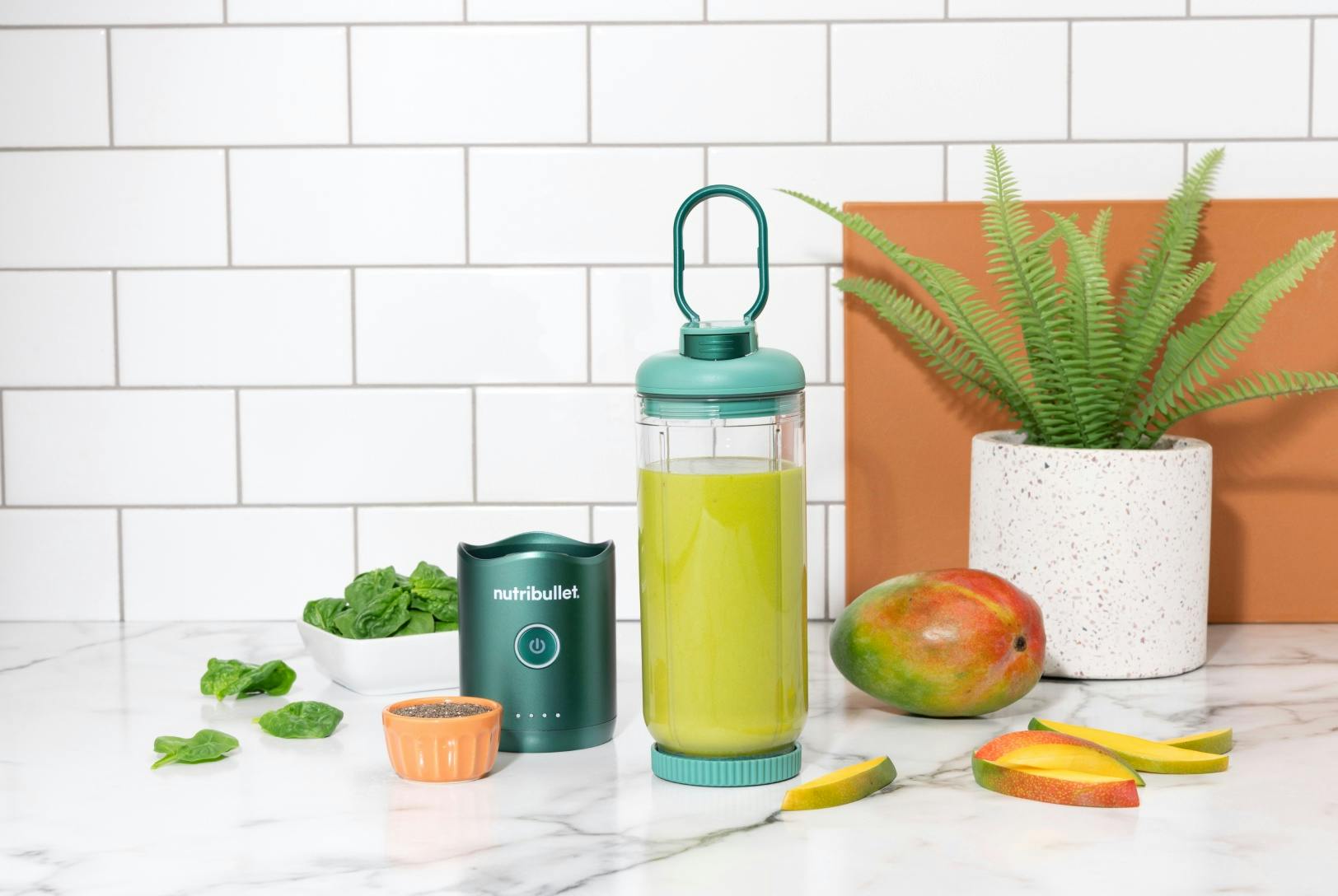
Start your day on a high note with this nutritiously cheerful blend of greens, mango, banana, and chia seeds.